


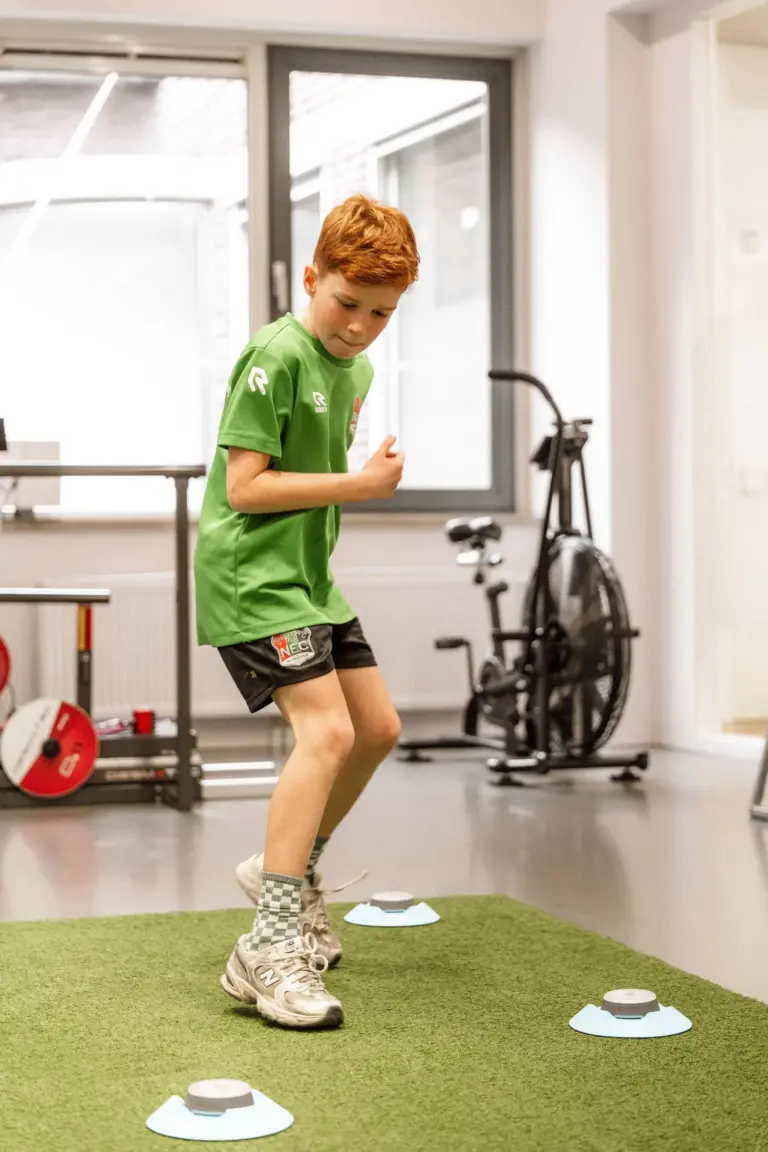
Sometimes a child's motor development proceeds slightly differently than expected. Do you notice your child having difficulty moving, falling more often, or picking up certain skills less easily? Or are you unsure about your baby's, toddler's, or child's development?
At Fysio Roode in Berghem, we have a pediatric physical therapist who specializes in the motor development of children. Together, we will look at what your child needs to continue moving with confidence and joy.
Pediatric physical therapy is different from adult physical therapy. We work in a way that suits the child, playfully, patiently, and in a familiar environment. Parents are always welcome during treatment.
Do you have doubts about your child's development?
As a parent, you know your child best. If you feel that something isn't quite right with how your child moves or develops, it's always a good idea to have it checked. Early intervention makes a big difference.
Your child often falls or moves clumsily
Some children seem extra clumsy, fall more often than their peers, or bump into things. This could be a sign that their gross or fine motor skills need extra attention. Pediatric physical therapy helps children become stronger and more skillful.
Your baby has a preferred position or lies asymmetrically.
A baby who always looks to the same side, has a flattened back of the head, or experiences difficulty with certain movements may have a preferred head position. This can be treated effectively, but the earlier you start, the better the results.
Your child has difficulty with writing, sports, or balance
Children who have difficulty with writing, get tired quickly during gym class, or have poor balance may benefit from pediatric physical therapy. We assess what's causing these issues and work specifically toward improvement.
When pediatric physical therapy helps
Baby (0 to 2 years)
Preferred posture and flattening
A preferred head position often develops in the womb or during childbirth. This can make the neck less mobile on one side. Gentle exercises and adjustments at home can resolve this.
Delay in rolling, sitting, or crawling
Every baby has their own pace, but if a child is significantly behind other children in rolling, sitting, or crawling, it's wise to have it assessed. We'll look at what the child needs and support their development.
Toddlers (2 to 4 years old)
Walking, falling, and balance
Toddlers who walk in a noticeable way, fall a lot, or have difficulty climbing stairs can benefit from targeted exercises. We tailor these exercises to the child.
Motor development
We assess your toddler's motor skills and compare them to what's expected at that age. If there's a delay, we'll create a treatment plan tailored to your child's developmental stage.
School-aged children
Writing and fine motor skills
Difficulty with writing, cutting, or crafting can be related to weaker fine motor skills. We practice this in a way that the child enjoys, so there is motivation to practice outside of therapy as well.
Posture and movement
Children who sit a lot, for example due to a lot of gaming or screen time, can develop neck, back, or shoulder complaints. We provide advice on posture and ensure that the child learns to move properly.
How we help your child
Intake and assessment
Analysis of motor skills and movement
The first appointment always begins with a conversation with the parents. We ask about the pregnancy, the delivery, and the child's development. Afterwards, we observe how the child moves and which skills are already present or still need to be developed.
Tailored treatment
Playful practice
We always work in a way that suits the child's age and level. Exercises are packaged as games, so children stay motivated and progress without it feeling like ‘work’.
Practical exercises for home
Parents play an important role in recovery. We provide clear exercises and tips that you can do at home. This way, we strengthen the effect of the treatments and your child will make faster progress.
Make an appointment for pediatric physical therapy
Reimbursement and referral
For pediatric physical therapy, you often need a referral under your general practitioner or specialist. The treatments are reimbursed from the basic insurance for children up to 18 years old. Contact us if you have any questions about this.
Pediatric physical therapy without a referral
In some cases, you can also come to us without a referral. Call us for more information or make an appointment directly. We are happy to help you quickly get clarity on what your child needs.

