


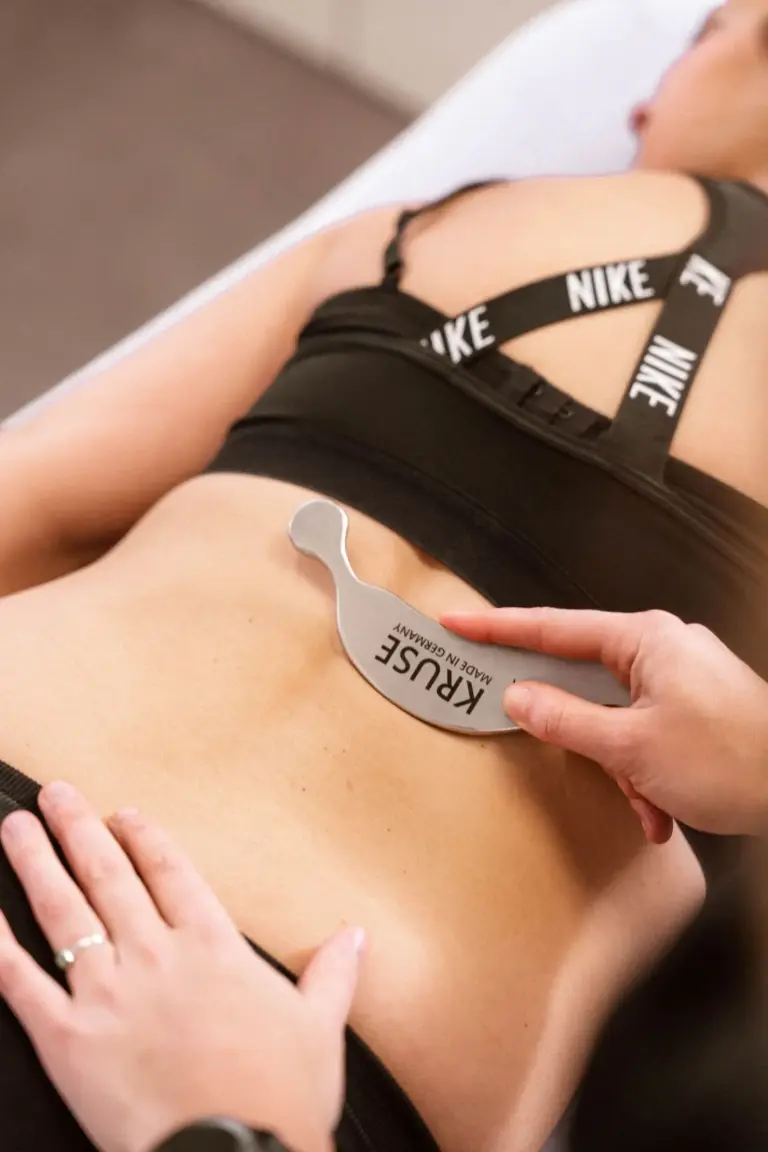
Do you regularly feel stiff, tense, or restricted in your movement without a clear cause being found? Then fascia integration therapy might be for you. At Fysio Roode in Berghem, we work with this specialized treatment method for people with tension or stiffness in their connective tissue.
Fascia integration therapy focuses on the connective tissue in your body. This tissue envelops muscles, joints, and organs and plays a significant role in how you move. If the connective tissue is tense or has adhesions, you'll notice it throughout your body.
Suffering from tension or stiffness in your body?
Connective tissue symptoms are not always easy to describe. You feel stiff, tense, or restricted, but nothing can be seen on a scan or image. Yet the symptom is very real and can be significantly bothersome.
You feel stiff or restricted in movement
Stiffness that doesn't go away with rest, that hinders your daily movements or sports, can be a sign that your connective tissue needs attention. We investigate where the tension is and treat it specifically.
You have persistent pain symptoms.
Symptoms such as fibromyalgia, persistent muscle pain, or recurring tension in the back and shoulders sometimes respond well to fascia therapy. We look at the whole body, not just the place where you have pain.
Your body feels out of balance
Some people describe it as a feeling of crookedness or imbalance in the body. As if something is pulling or pinching. Fascia therapy helps to distribute the tension more evenly and bring the body back into balance.
Fascia integration therapy is a type of manual therapy that focuses on the fascia, a connective tissue that surrounds muscles, bones, and organs. The therapy aims to release tension and adhesions in the fascia, which can improve flexibility, reduce pain, and enhance overall body function.
Connective tissue as the foundation of your body
Fascia connects muscles and structures
Fascia is a thin but strong sheet of connective tissue that runs throughout your entire body. It envelops muscles, tendons, joints, and organs. You can think of it as a kind of suit that holds everything together and enables movement.
When fascia is healthy, it is supple and mobile. If it becomes tense or adhesions form, it can cause issues in areas that are sometimes far removed from the actual cause.
How symptoms arise
Adhesions and tension in connective tissue
Stress, overload, poor posture, or old injuries can cause connective tissue to lose its elasticity. This results in adhesions or hardening that restrict movement and cause pain.
Fascia integration therapy works on releasing these adhesions and restoring suppleness in the connective tissue.
When fascia therapy helps
Whole-body tension
Adhesions in connective tissue
With gentle manual techniques, we treat the areas where the connective tissue is adhered. This may feel intense at times, but it is not painful. Many people notice the tension easing during the treatment itself.
Limited mobility
If you notice that certain movements are no longer smooth, it could be due to the fascial system. We restore mobility by working specifically on the tense structures.
Chronic symptoms
Recurring pain
Recurring pain in the back, neck, or shoulders sometimes responds better to fascia therapy than to conventional physiotherapy. This is because we take a broader view and treat the connective tissue as a whole.
Difficulty moving smoothly
Some people always move a bit tensely, as if they are constantly ‘on.’ Fascia therapy helps the body to release and move more freely.
How we help you
Manual treatment
Releasing connective tissue
With targeted techniques, we work on the areas where the connective tissue is most tense. We work calmly and precisely, listening to how your body responds.
Exercises and training
Fascia fitness
In addition to manual therapy, we also offer fascia fitness. These are movement exercises specifically aimed at training and maintaining connective tissue. Think of springy movements, stretching, and body awareness exercises.
Fascia fitness is a good supplement to treatment and helps to maintain the results.
Improving movement quality
The goal is not just less pain, but also a better, smoother way of moving. We work on your posture, your movement patterns, and your awareness of how you use your body.
Make an appointment for fascia therapy
Reimbursement and referral
Fascia integration therapy is part of physiotherapy and is often reimbursed through supplementary insurance. A referral from your general practitioner is not always necessary. Call us for more information.
Personal guidance
We always start with a comprehensive intake. We listen to your symptoms, examine your body, and explain what we are going to do. This way, you’ll know exactly what to expect. Make an appointment through our website or call us in Berghem.


